Why Metro Viaducts Use Concrete Box Girders and Segmental Construction
Why Metro Viaducts Usually Use:
✔ Concrete Bridges
✔ Box Girders
✔ Segmental Construction
𝟭. 𝗪𝗵𝘆 𝗖𝗼𝗻𝗰𝗿𝗲𝘁𝗲?
- High mass & stiffness → smoother ride: Concrete is heavier and stiffer, so it reduces vibration and noise, even at high metro speeds. This makes the train quieter and more comfortable, especially in cities.
- Better fatigue resistance: Metro trains run very often. Concrete handles millions of repeated loads better than steel, which can crack from fatigue.
- Longer life and lower cost : Concrete does not rust, needs less maintenance, and has good fire resistance. Over the whole life of the bridge, it is much cheaper than steel.
𝟮. 𝗪𝗵𝘆 𝗕𝗼𝘅 𝗚𝗶𝗿𝗱𝗲𝗿𝘀?
Box girders act like closed tubes. This shape gives several important advantages:
- High torsional rigidity: It resists twisting very well—important for curved metro tracks.
- High bending capacity: Strong enough for heavy and fast metro trains.
- Even stress distribution: Reduces cracking, increases durability.
- Space inside the girder: Box girders allow space for cables, drainage, and inspection walkways, making maintenance easier.
𝟯. 𝗪𝗵𝘆 𝗦𝗲𝗴𝗺𝗲𝗻𝘁𝗮𝗹 𝗖𝗼𝗻𝘀𝘁𝗿𝘂𝗰𝘁𝗶𝗼𝗻?
Unless it's absolutely necessary to span long distances, around 50 meters or less, the Segmental Construction offers many significant advantages over other methods.
A. Fast Construction
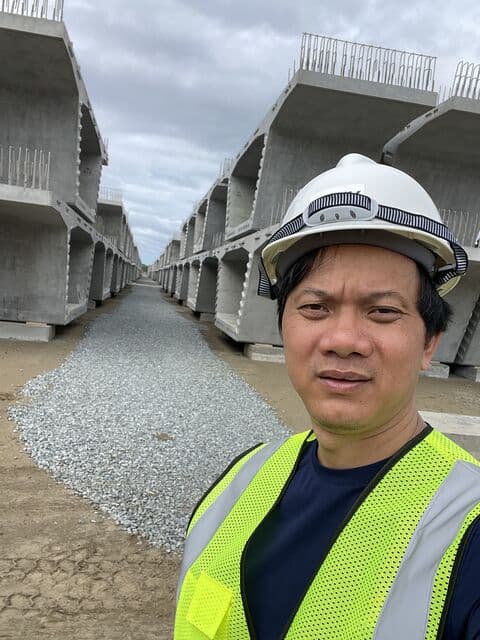
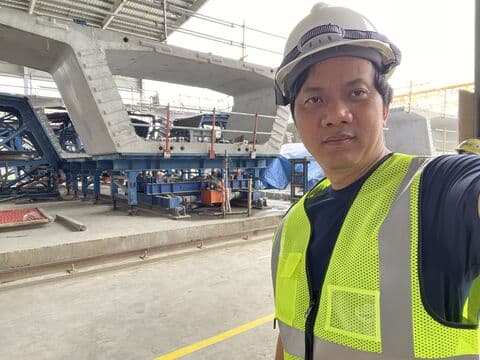
- Precast production in a controlled yard enables continuous, high-quality segment fabrication. With the short-line method, production capacity can be easily scaled by adding more casting beds.
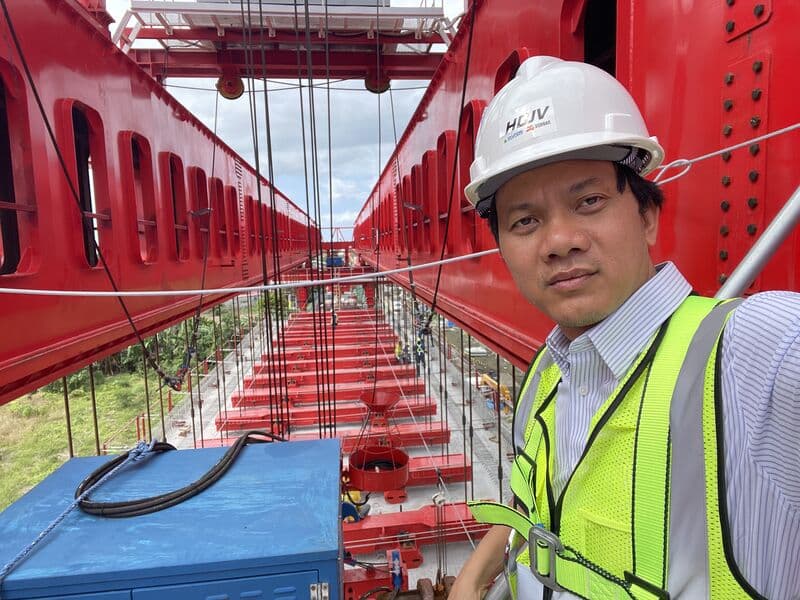
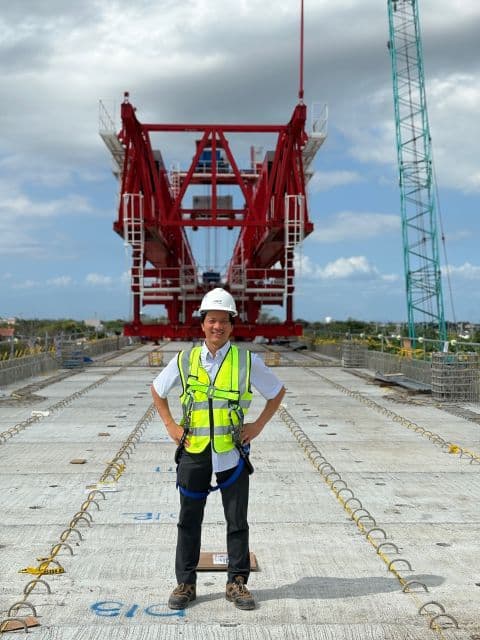
- Rapid erection using a launching girder (LG) places segments directly into final position. Although LG equipment is costly, metro viaducts typically consist of hundreds of repetitive spans; therefore the equipment investment is amortized over many uses, resulting in low
B. Very High Geometric Accuracy
For high-speed metro operation, geometric precision is critical. During segment erection, the coordinate of each segment can be fine-tuned in both vertical and horizontal before post-tensioning. This allows the completed girder to achieve millimeter-level accuracy in profile and plan, which is difficult to achieve with cast-in-place or other construction methods.
C. Reduced Girder Depth
Compared with methods such as balanced cantilever construction, which require the girder to resist large temporary construction loads, resulting in oversized sections—especially near the piers—that are heavier and more expensive than necessary for service conditions.
In precast segmental construction, however, the girder is designed only for in-service loads, because all erection loads are carried by the launching girder (LG). As a result, the girder can be made significantly shallower and more efficient.
Across hundreds of repetitive metro spans, this reduction in girder depth and concrete volume leads to substantial savings in overall cost.
#envico #geometrycontrol #castcontrol