Bamboo Scaffolding as a Structural Material
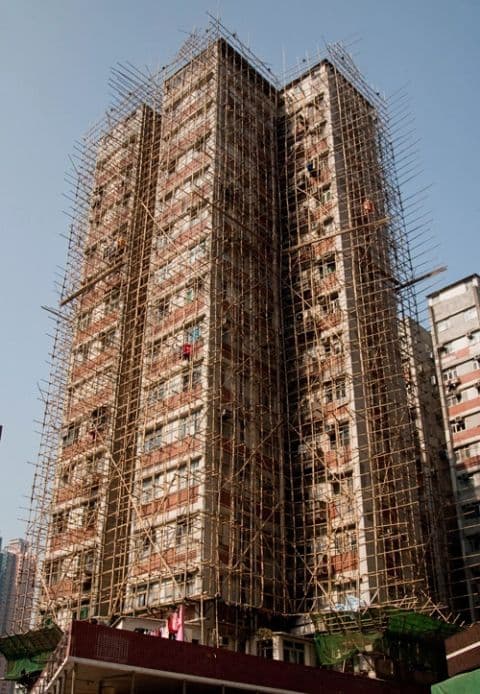
Today I read the news: a building under construction in Hong Kong caught fire, and the bamboo scaffolding was seemingly the cause.
Deep down I know it’s only a matter of time. This “natural masterpiece of strength” will eventually be phased out and replaced by aluminium and steel.
But when I think about it, I totally get why bamboo scaffolding has survived until today.
1. The fibers run perfectly straight from bottom to top
Unlike most wood where the grain twists, curls and grows sideways, bamboo’s fibers go almost 100% straight along the length of the pole. That gives it incredible tensile strength (sometimes even stronger than regular construction steel) and amazing flexibility.
Years later when we invented carbon fiber, we realized: hey, bamboo is basically a natural carbon-fiber composite.
2. Hollow tube with evenly spaced nodes
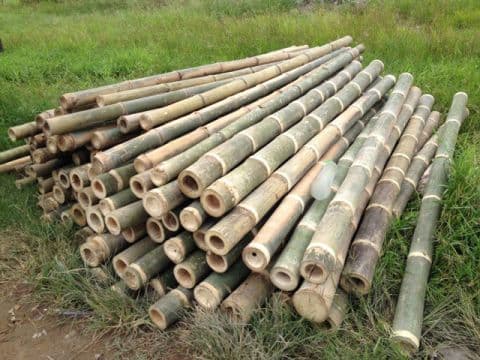
It’s hollow inside (just like the steel tubes we design today) so it’s light yet strong. Those nodes you see every 30–50 cm. They act exactly like reinforcement plates or stiffeners, preventing the pole from buckling or crumpling under load.
3. Friction joints
No nails, no bolts, no welding. Just tie them really tight with rope and the rough surface of the bamboo grips each other like crazy. The whole scaffold stays rock solid thanks to that friction. Most people have no idea how strong those simple ties actually are.
4. Insanely fast growth
Because it only grows upward, has a thin outer wall and is hollow inside, bamboo is probably the fastest-growing structural material on the planet. Some species grow nearly a meter a day.
5. Super light, easy to carry, easy to cut and shape on site
You can lift a 6-meter pole with one hand, cut it with a normal saw, and two workers can put up bamboo scaffolding many times faster than metal, no heavy machines needed.
So many of our “great inventions” in materials and construction that started in the West (where bamboo basically doesn’t grow) were us trying to solve problems that bamboo had already solved millions of years ago:
move material far from the neutral axis → hollow tube
prevent local buckling → add nodes/stiffeners
better connections → rough surface for friction
super-strong fibers in one direction → hello carbon fiber
We spent over a century and billions of dollars inventing things that bamboo has been quietly doing since prehistoric times.
So yes, fires like today’s are scary and dangerous, and one day bamboo scaffolding will probably disappear from Hong Kong’s skyline.
But until then, I just have to smile: nature got there first… by a few million years.